Date
Category
News
By Alan Ohnsman, Senior Editor at Forbes.
Welcome back to Current Climate. Booming battery demand combined with steep tariffs on imported battery materials and components has created price and supply chain headaches for manufacturers, but startup R3 Lithium thinks it can provide a little help. That’s because the Georgia-based startup says it will soon be supplying thousands of tons of battery-grade lithium recovered from used cells.
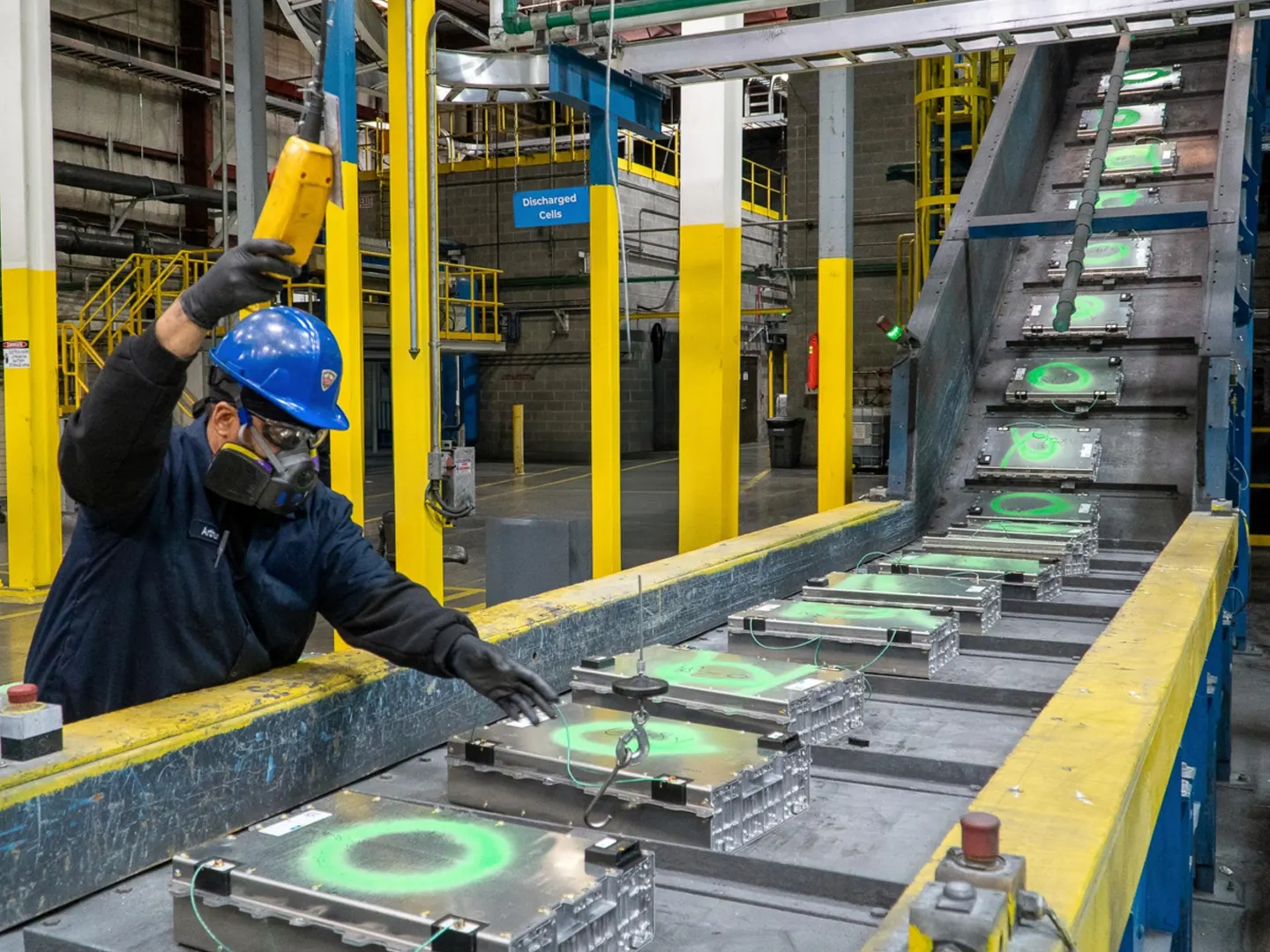
The company, which bought an idled factory in Covington, Georgia, built by bankrupt battery recycler Ascend Elements, said last week that it’s restarting operations at the facility and plans to begin commercial shipments of lithium carbonate in August 2027. The main source material is scraps from battery factories around the country, many of which are concentrated in nearby Southeastern states.
Unlike other domestic battery recycling operations that grind up used cells into “black mass” and ship it overseas to extract the lithium, R3 is keeping that process entirely in the U.S. “Today, most black mass is shredded in North America and Europe and shipped to Asia, where they do the refining,” said CEO Linh Austin. “Then they ship back the critical minerals we need. The analogy I tell people, being a longtime oil and gas guy, is it's just like we extract all the oil in the U.S., ship it to somebody else to make jet fuel, gasoline, diesel, and then ship it back for us to drive in our cars. That's been the piece that's missing.”
Austin signed on as Ascend’s CEO in 2025, which built the Georgia factory for $150 million, before guiding it through the bankruptcy process earlier this year. The Georgia factory is scaled to produce 2,500 metric tons of lithium carbonate, essential for lithium-ion batteries, but R3 is also raising a further $90 million, on top of a recent $15 million Series A round, to double its capacity to 5,000 tons a year.
The timing is good as it coincides with a push by the Trump administration to localize the mining and refining of critical materials in the U.S. in order to reduce the country’s excessive reliance on China. And already, R3 says it has agreements from customers worth at least $1 billion for lithium refined at the Georgia factory.
Tesla recently opened its own massive lithium refinery in Texas, though it processes newly mined rather than recycled material. R3 will be competing with Redwood Materials, which has been selling refined lithium from old batteries for a few years. Along with the Georgia plant, R3 also wants to set up additional lithium refineries in North America and Europe, also scaled to produce 5,000 tons of lithium carbonate annually.
Though the capacity of each is just a tenth of what Tesla hopes to produce at its refinery, Austin says R3’s smaller scale gives it more flexibility.
The goal is to be “located geographically closer to the customer and the feedstock,” he said. “That saves on logistics. If I'm co-located next to you and I can give you lithium carbonate, it saves us all a bunch of shipping costs.”
Read on Forbes.